

A ransomware gang may have leaked the personal information of hundreds of thousands of people onto the dark web last week after stealing data from the City of Columbus in July.
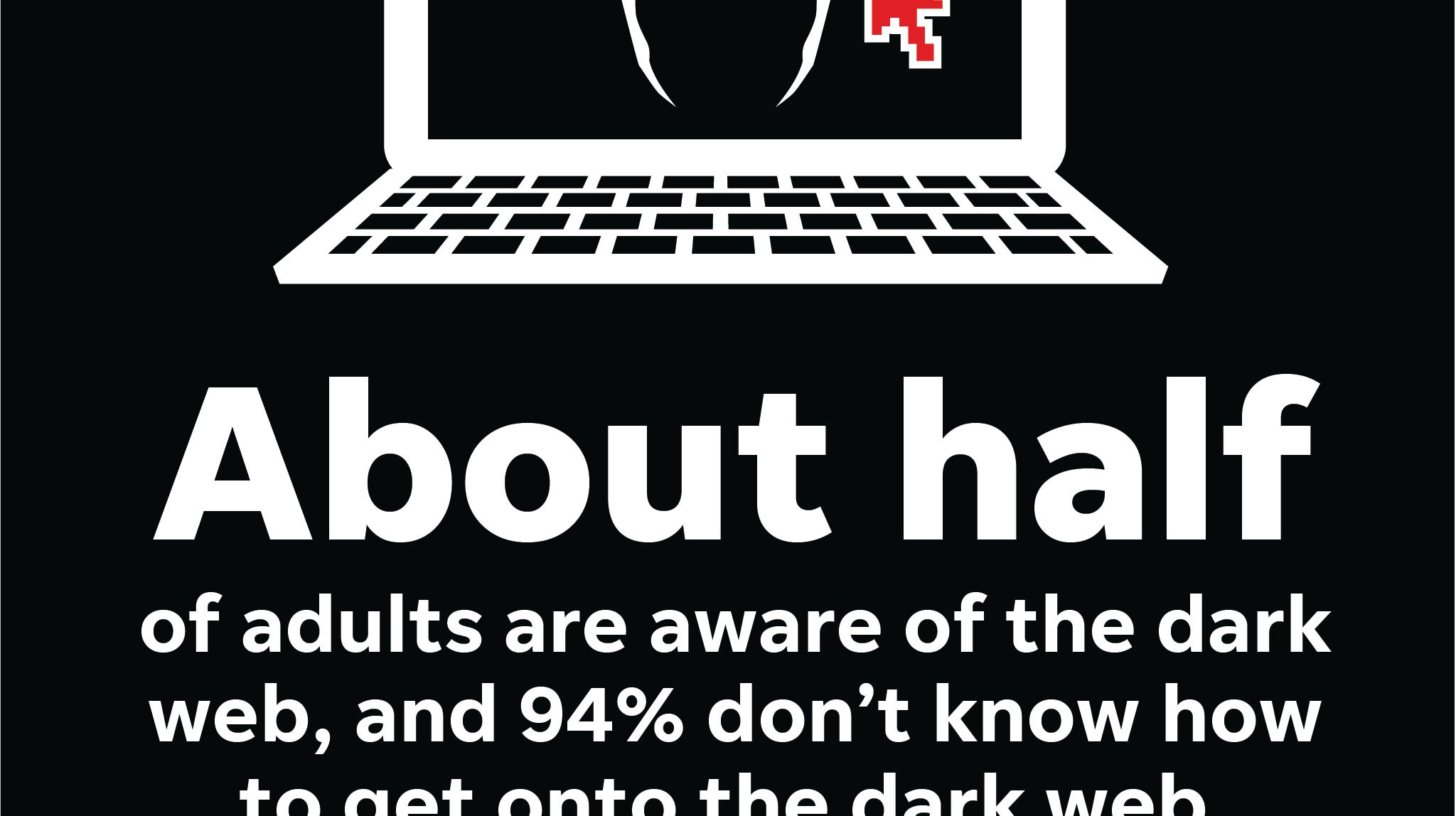
But the dark web isn’t a place people stumble upon by chance: Most people have never been there, nor do they know how to get there.
Here’s what you need to know about this mysterious part of the internet that’s invisible to most users.
What is the dark web and how do you get there?
The dark web is a part of the internet that can only be accessed via special browsers that hide the data that passes through it.
The browser, the Tor Browser, is essentially an improved version of Mozilla Firefox and routes information sent from a client (such as a computer) to a server (such as a website) between six random nodes, said Carter Jageman, an assistant professor of computer science and engineering at Ohio State University.
This makes the Tor Browser anonymous and untraceable to the user and website host.
The dark web is a part of the deep web, which includes any part of the internet that’s not indexed by search engines like Google. You don’t need the Tor browser to access the deep web; it just includes internal sites that search engines can’t find, or sites that require a login, Yagemann said.
“For example, parts of Facebook may be considered the deep web because the average user may not be able to access it,” he said.
Dark web sites are much harder to find than regular sites.
Users must know the specific URL, which consists of random numbers and letters and ends in .onion rather than the more commonly used .com or .org, and there is no Google equivalent that indexes all these addresses, Yagemann said.
What’s on the dark web? What is it used for?
Jagemann said the dark web is primarily used by people looking to avoid surveillance, including criminals.
Criminals use the dark web to deal drugs, solicit murders and distribute child pornography, he said.
Criminals are also using it for cybercrime. The Rhysida ransomware group recently attempted to auction 6.5 terabytes of stolen city data on the dark web after infiltrating the city of Columbus’ systems in July. The auction appears to have failed, and the group leaked over 3 terabytes of sensitive data to the dark web.
The dark web also once housed an Amazon-style online marketplace primarily used to sell drugs. Called “Silk Road,” the marketplace allowed users to browse products such as “White Russian” marijuana, high-grade cocaine, and the synthetic psychoactive drug 25I-NBOMe, according to screenshots of the marketplace posted to researchgate.net.
The marketplace collapsed in 2013 after the FBI arrested the site’s founder, Ross Ulbricht (who went by the name “Dread Pirate Roberts” online), and shut down the site.
That hasn’t stopped illegal sales on the dark web, however, with one illegal website generating $219 million in sales in 2017, a few years after Silk Road was shut down, according to a RAND Corporation report.
The Tor browser’s anonymization settings also make the dark web useful for spies, activists hiding from authoritarian regimes, and people trying to circumvent censorship and internet restrictions, Jagemann said.
However, the dark web isn’t just filled with crime and state secrets.
“What happens on the dark web is similar to what happens in everyday life, it’s just harder to link a server on the dark web to a specific person and it might be harder to hold that person accountable under the law,” Jagemann said.
email address
Nathan Hart
