

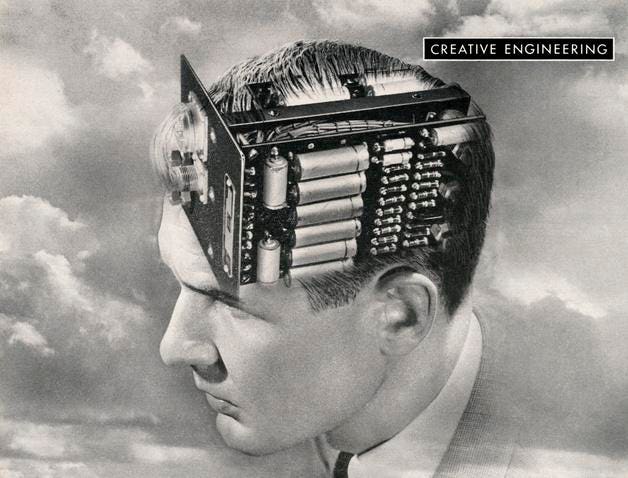
Leaders should ask themselves, “What impossible things can my people accomplish with AI?”
Klarna, the ‘buy now, pay later’ market leader, has revealed that artificial intelligence has taken over their jobs after laying off 700 employees. Klarna is now joining the ranks of companies that are cutting jobs in order to pursue efficiency and reap the benefits. How do they achieve this?
Their answer is “Corporate Ozempic.” Also called artificial intelligence.
Just as diabetes treatment has rapidly evolved into an effective weight loss aid, AI has captivated leaders with its ability to perform sophisticated tasks at scale and at speeds impossible for mere humans. Although many still don’t want to admit it, AI is the latest option for organizations looking to get leaner.
People and technology share a complex relationship. Innovative technologies provide immediate solutions to our problems, but we have little understanding of their long-term impact. Facebook’s mission was not to spread misinformation. Airbnb never intended to reduce supply in the housing market and disenfranchise the most vulnerable. No one predicted that Uber would ignite a new segment of shared services in the gig economy. The promise of AI is clear. Achieve more in less time with fewer resources. However, leaders must resist the AI hype cycle and proactively evaluate the broader impact of AI on their organization’s culture, innovation capabilities, and broader ability to execute effective strategy.
So if AI is to businesses what Ozempic is to people who want to lose a few pounds quickly, what are the side effects?
The first is the flattening of workplace culture. An organization’s culture is a force multiplier for progress. Many scientific studies have empirically shown that strong cultures produce teams that are more determined, more entrepreneurial, and more resilient. As machines increasingly replace our colleagues, we will also lose the cognitive diversity that improves the way people generate and invest the discretionary effort they need to compete. . Ultimately, when AI is used to reduce the human element in organizational life, it also reduces the grit and drive needed to move an organization forward.
The second side effect is that human ingenuity diminishes. Curiosity makes us ask the questions that really matter and drives innovation in organizations. Leaders seeking efficiency run the risk of automating their company’s ability to ask new questions and generate new solutions, activities that are critical to staying ahead of competitors. There may be a future where sentient AI scans the business landscape and generates truly entrepreneurial ideas. But AI as we know it today can’t do any of those things. After all, even companies like OpenAI are using humans, not AI, to build some of the most innovative tools this century. To build the next generation of innovation, leaders must use their AI to enhance, not remove, the innovation capabilities of their employees. By combining human ingenuity and curiosity with generative AI’s knack for recombining existing information, leaders can significantly increase the entrepreneurial and creative potential of their teams.
The final side effect is decreased teamwork. Despite what the news headlines might suggest, the human ability to collaborate is one of our greatest strengths. As AI mechanizes our intellectual capital, it’s tempting to think that teams will be dismantled and relationship disruption will become a thing of the past. After all, AI is an exemplary team member. You don’t bring your childhood into your team dynamics or get demotivated by the fickle temperament of your human teammates. But my point is that as we move away from working and toward coordinating work, the uniquely human ability to form cohesive relationships becomes even more important. A team’s social capital will determine both the success of an organization’s AI strategy and whether employees remain enthusiastic about the organization’s mission.
The use of AI to reduce headcount is inevitable. Throughout history, technology has served as both a means of job destruction and job creation. While the obvious use for AI is miniaturization, its real potential lies in its ability to create value. Depending on the extent to which you can use AI to enhance your team’s curious, engaged, and collaborative tendencies, you’ll become more optimistic about your team’s ability to open up new revenue streams and develop new innovations you never imagined. You can become a target. Organizations that leverage AI in this way will definitely gain a competitive advantage over those that jump on weight loss shortcuts. In the race to adopt AI, we must not overlook the competitive advantage that comes from humans, not technology.
The question every leader should ask is, “What impossible things can my people accomplish with AI?”
