

With an iPhone and a headset, many people can now talk to others nearby.
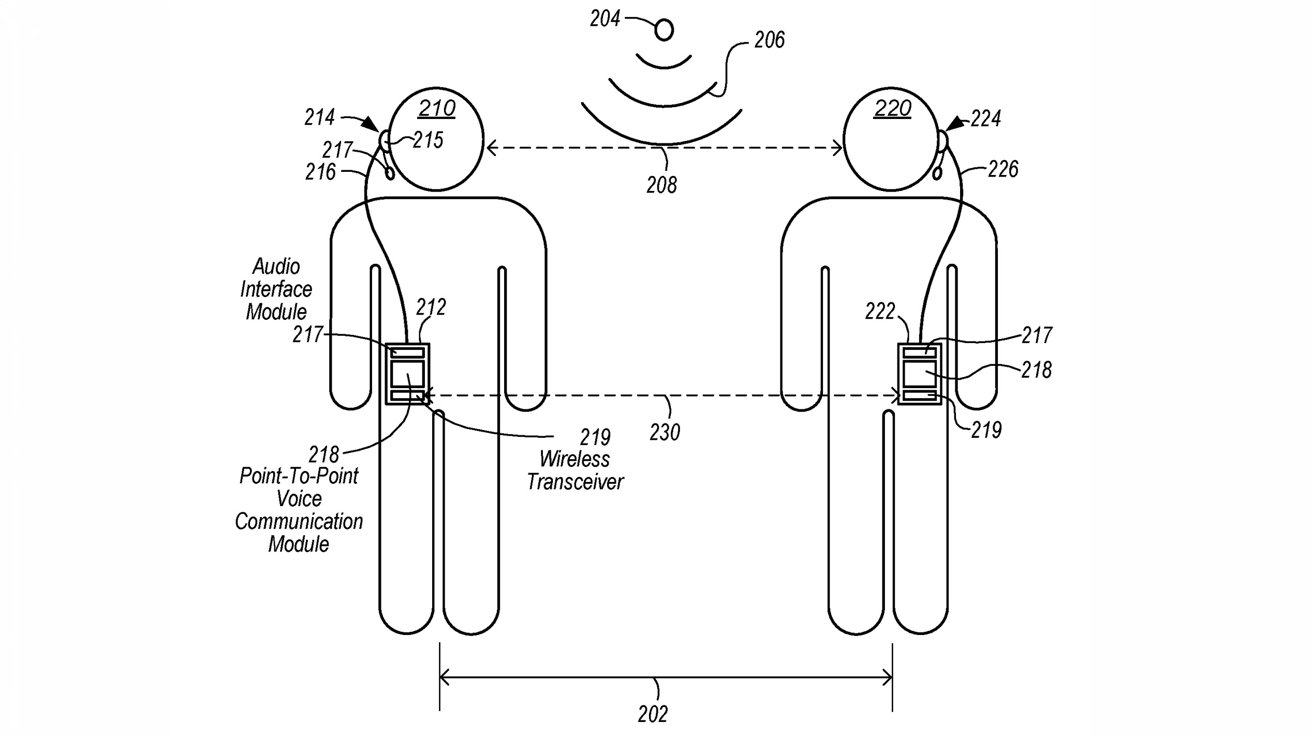
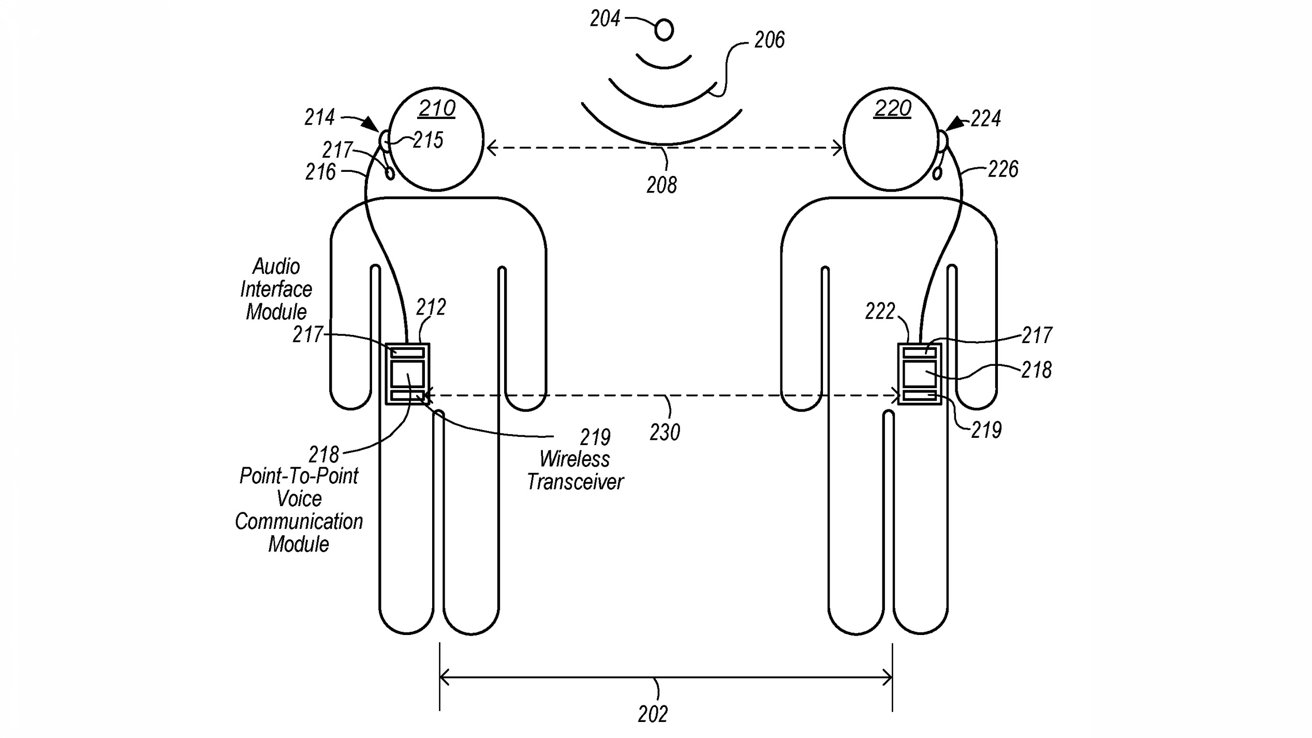
Apple is developing technology that would allow any number of people in close proximity to start an audio chat using just an iPhone and a headset like AirPods, without the need for Wi-Fi or cellular service.
It allows for instant communication, similar to the Walkie-Talkie feature on the Apple Watch, but between groups rather than individuals.
Unlike the walkie-talkie feature, this new technology eliminates the round trip to Apple’s cloud servers, eliminating one of the factors that makes walkie-talkies unreliable. And unlike walkie-talkies, it allows any group of people who want to talk to each other at the same time.
In a newly published patent application, Apple details a system for direct person-to-person communication between devices that communicate directly, rather than sending messages over the internet.
This technology brings a new communications experience where you can choose to talk to one or multiple people with seamless functionality using just the iPhone in your pocket.
In practice, this will be almost the same functionality as AirDrop for conversations. AirDrop allows iPhone users to connect and share files with other users without having to connect to a network or use the cloud for sending. This proposed technology allows for one-to-many connections, allowing all group members to talk to each other at the same time.
For example, a group could contact each other at a crowded festival and discuss where to meet up, and the iPhone would show how close people are, based on the same technology that shows direction and distance to AirTags.
The iPhone and Apple Watch are already able to find the location of people and objects thanks to Apple’s Ultra-Wideband (UWB) technology, which works a bit like echolocation, sending out radio waves and measuring the returning signals.
The UWB chip allows iOS and watchOS to get compass-like direction to devices like AirTags and provide real-time updates on distance.
This can also be used to meet new people – fellow festival-goers can chat with other potential attendees to share tips and advice on the best activities to do. Knowing the distance and direction to other people can also be useful when meeting up in groups.
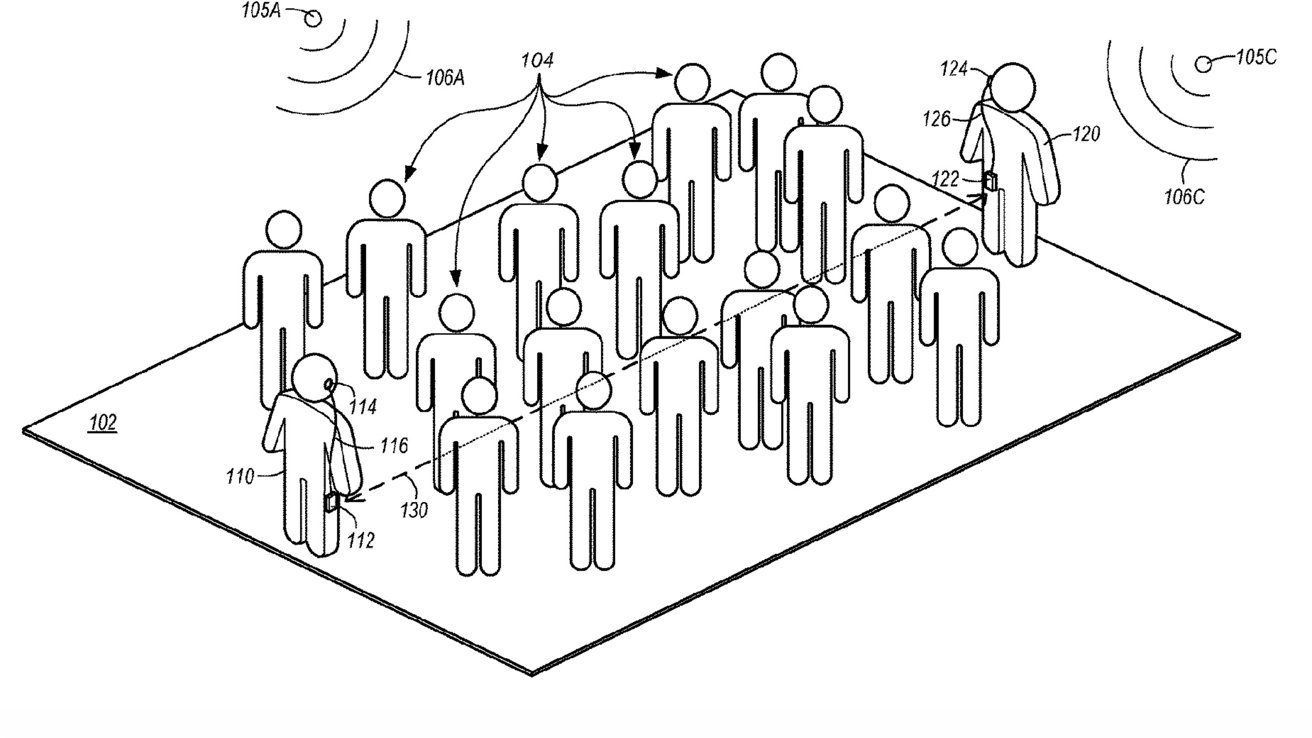
Apple’s system will allow groups to talk to people nearby.
Another powerful use is in emergency response situations, where teams can work together without needing the same physical walkie-talkie system and frequency.
Cellular networks are often overloaded or fail during emergencies, and Apple’s technology will allow connectivity even when cellular connections go down.
The patent shows an interface where nearby people are displayed in proximity circles, with people in the main circle being the closest people and people further away appearing in a larger circle.
The rings of the circle indicate the distance over which this ad-hoc network between people operates.
Similar to AirDrop, this new technology will allow users to add people to chats even if they are not in their contact list – people the user knows will be displayed by name, and strangers will appear in the interface based on distance alone.
Adding someone to a conversation is as simple as tapping on their name, and users can tap on as many people nearby as they like – anyone who comes within range will be added to the conversation.
Perhaps like when you start a messaging conversation with a group, strangers might share their contact cards and photos.
The patent filing specifically points to an iPhone and a headset as the core technology for this to work, but it’s not hard to imagine a headset like the Apple Vision Pro being used for these point-to-point communications.
When these systems shrink, perhaps to the size of Apple’s rumored Glasses, the ability to chat directly with neighbors will become even easier.
The patent application is by Esge B. Andersen and Cedrik Bacon. Andersen filed the original patent by the same name in 2022.
