

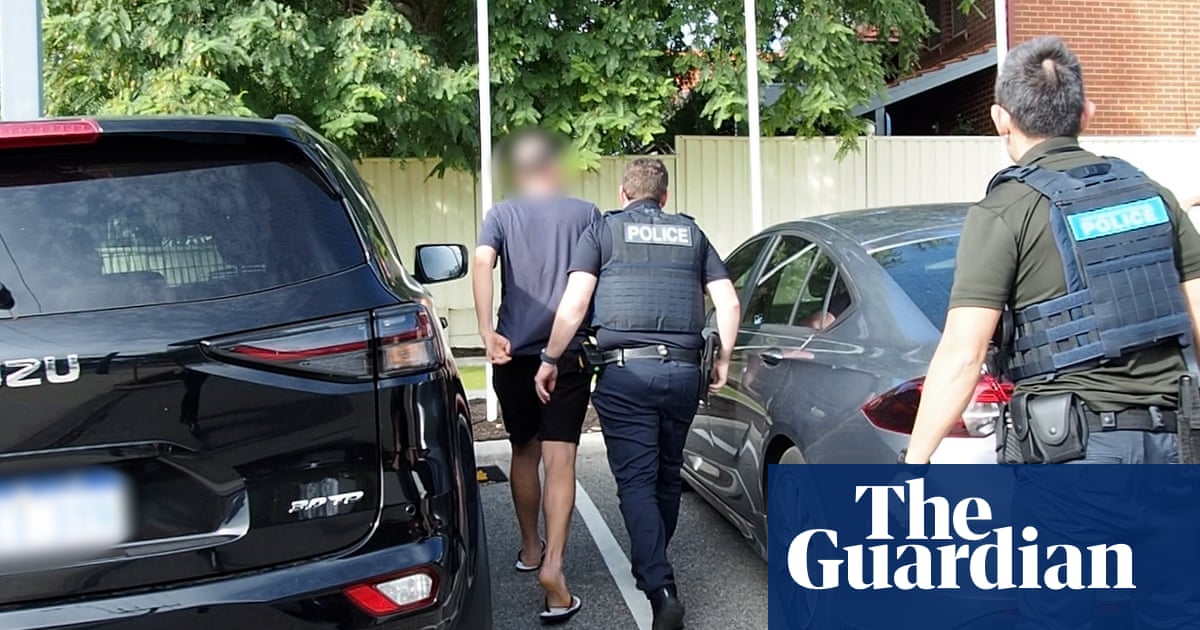
A man has been charged with setting up fake free Wi-Fi networks in Australian airports and on domestic flights, stealing personal information from unsuspecting members of the public.
The 42-year-old Western Australian man has been charged with nine cybercrime counts and was due to appear in the Perth Magistrates Court on Friday.
Australian Federal Police allege the man created an “evil twin” Wi-Fi network that mimicked a legitimate network in an attempt to trick users into entering their personal information.
The fake pages are allegedly set up at Perth, Melbourne and Adelaide airports, domestic flights and other locations which police say are linked to the man’s former workplace.
Police began their investigation in April after the airline reported that suspicious Wi-Fi networks had appeared during domestic flights, causing concern for staff.
Federal police said on Friday they found portable radio devices, a laptop and a mobile phone when they searched the man’s luggage after he returned to Perth airport.
The man was arrested and charged after his home in the Perth suburb of Palmyra was searched a second time.
Police allege the man’s fake Wi-Fi network directed users to dummy pages requesting email and social media login details, which were then stored on his device and could be used to access personal information such as online communications, photos, videos and bank account details.
The 42-year-old was charged with unauthorized interference with electronic communications, possession of data with intent to commit a felony, unauthorized access to or alteration of restricted data, unauthorized obtaining of personal financial information and possession of an identification document.
After newsletter promotion
Detective Inspector Andrea Coleman, from the AFP Cyber Crime Unit, said members of the public should be careful when logging onto public Wi-Fi networks.
“You shouldn’t have to give out any personal information, like logging in with your email or social media account,” she said.
Coleman advised anyone who has tried connecting to free Wi-Fi networks at airports or on domestic flights to change their passwords and to report any suspicious activity to police.
She also urged users of public networks to refrain from logging on to banking sites or carrying out other tasks involving sensitive information, and to ensure they take personal cybersecurity measures, such as disabling file sharing on their devices and installing virtual private networks.
