

We are used to physically simulating products, factories, and buildings. To prevent bridges and buildings from collapsing, perform simulations before construction. However, simulation is becoming increasingly important for anticipating the complex challenges posed by smart cities, especially the implementation of wireless networks. Ansys recently introduced an innovative solution to address these challenges. DirectIndustry spoke with Christophe Bianchi, his CTO at Ansys, to explore how carriers can optimize their networks to meet the needs of tomorrow’s connected smart cities.
With the development of 5G And that 6G promise,To power future smart cities, the ability to exchange data,between wireless networks will be essential.
The goal is to improve service delivery to users, which is of great importance to stakeholders in the telecommunications industry. In fact, monetizing 5G is a big topic right now.
Traditionally, the focus has been on developing equipment for antennas and communication systems. However, with the transition to denser 5G networks, traditional analytical and statistical planning methods have become inadequate. Electromagnetic simulation will be required. Accurately predict network performance to optimize your deployment strategy.
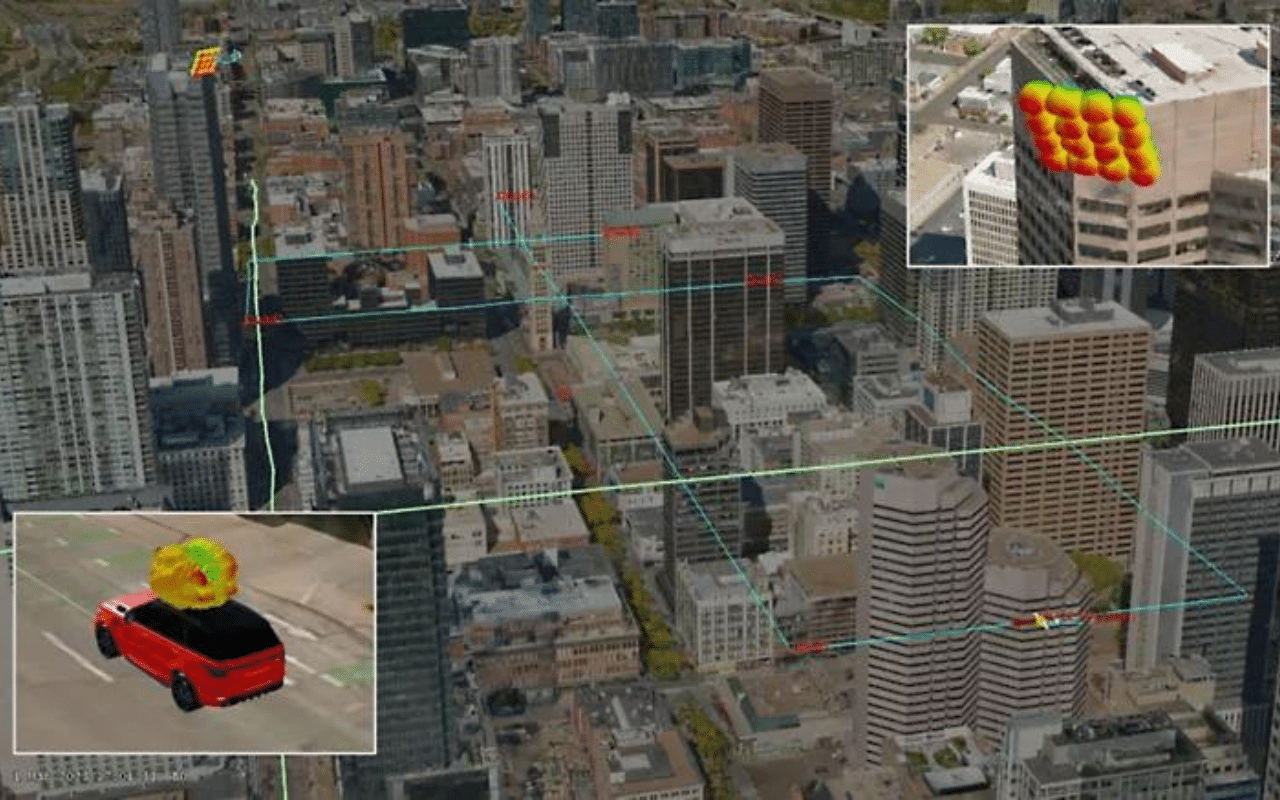
Numerical simulation experts Ansys have developed a new tool, Ansys RF Channel Modular. The tool allows complex urban environments to be simulated in real time, taking into account factors such as signal reflection and material properties, ensuring efficient deployment of 5G and later 6G networks. .
We spoke with Christophe Bianchi, CTO of Ansys.
Why is numerical simulation of electromagnetic waves needed today to plan 5G and soon 6G networks?
Christophe Bianchi: “The transition to 5G, primarily focused on urban areas, has made traditional planning methods based on statistical and parametric analysis obsolete.In fact, 5G’s higher frequencies, especially the mmWave band above 23 GHz, have made traditional planning methods based on statistical and parametric analysis obsolete. presents unique challenges in terms of signal propagation in complex urban environments. The millimeter waves used in 5G can indeed be reflected in different directions, which makes it difficult to provide optimal quality of service in cities. It has become essential to use simulation to accurately determine the number of antennas needed to
Simulation allows you to create detailed virtual models of urban environments and predict different usage scenarios, including future developments such as new urban developments. This will enable informed decision-making regarding the physical and software deployment of communications infrastructure for successful deployment of his 5G in urban environments. ”
We have developed a new solution to address this issue. Could you tell me more about that?
Christophe Bianchi: “What we have developed and announced a few weeks ago at Mobile World Congress represents a significant evolution of our tools. This integration allows for scenarios to be expressed at a city-wide scale.
The complexity of this task lies in the variety of scales involved. Although we focus on the nanoscale electromagnetic waves emitted by antennas, we also need to consider the kilometer scale of the city itself. Our new tools allow us to simulate this full range of scales with great accuracy and in real time. On a computer, it is therefore possible to visualize a city in 3D with a resolution of about 5 centimeters, taking into account certain properties of building materials such as glass and concrete that influence wave propagation.
This new tool Ansys RF Channel Modelerprovides comprehensive solutions for communications network planning and optimization. Whether it’s deploying new networks or improving existing infrastructure, our technology enables effective analysis and adaptation of his 5G deployments, making them more efficient in urban and other environments. Pave the way to reliable connectivity. ”
In other words, you are creating a digital twin of your city. How does it work?
Christophe Bianchi: “There are very accurate physical databases available for almost every city. Some of these databases have a resolution of up to 5 centimeters. This is much more accurate than typical GPS. This representation is then downloaded and the analyst implements the antenna on the digital twin.
Next, we define the mission in a system called digital mission engineering. This mission may involve drones, for example in the case of expedited drug delivery experiments. How can you make sure your drone always has the information it needs to navigate, and that its guidance signals aren’t blocked by obstacles? You can simulate these scenarios.
Our tools are simple and provide a variety of KPIs (delay rate, signal quality, message delivery guarantee, message prioritization, noise rate, etc.) depending on the application. Being a digital twin, you can be sure that new equipment choices are always available. This is consistent with the KPIs originally set. ”
Who is this solution primarily aimed at? Telcos?
Christophe Bianchi: “Certainly in the long run, that could have an impact on carriers.
For example, when public 5G networks are rolled out, multiple carriers are likely to be involved. What about interference? What would happen if each of these carriers deployed his own 5G network on his 28 GHz millimeter wave frequency? It is very difficult to measure all possible scenarios. So how can you ensure that the service provided is the same when you install or change antennas, change providers, or use software to move to another carrier? The solution is to simulate it. That’s where our tool comes in.
Knowing the location and characteristics of installed antennas allows us to transmit typical information flows, observe how these elements interact, and determine whether they interfere with communications and signal quality. You can judge. Signal interruptions increase latency and reduce quality of service. Ultimately, however, monetizing 5G will depend on guaranteeing quality of service.
A deep understanding of the installation and its performance allows for dynamic adjustments. In the context of 5G, network slices can be allocated and prioritized to specific carriers. This is very important. If we imagine a connected city where all vehicles drive autonomously and all city infrastructure is connected to the network by his IoT, we manage it. traffic lightIt is important to be able to manage priority interventions such as ,priority, toll plazas, etc., such as ambulances and fire trucks that have to traverse the city on a priority basis.
This also applies to communication signals. Some signals may have higher priority than others. But if you offer this prioritization service, how do you make sure carriers can offer it? Sell it first over others, and therefore make it 10x more expensive? Because in order to claim a subscription, you need a guarantee. Simulation is a tool that makes this possible.
However, 5G is not limited to public services. private 5g It is growing rapidly, especially in Industry 4.0, where it is used to ensure low latency and persistent connectivity. Therefore, this is a use case that can also be applied to private networks. ”
What are the practical applications of this technology?
Christophe Bianchi: “One practical application of this technology is in the field of self-driving cars. Achieving Level 4 of autonomy, where vehicles drive completely independently, requires that vehicles communicate with each other and also have access to road infrastructure. need to communicate with. V2X.
5G is the key technology to make this possible. However, the main question is how to ensure that critical information is provided at the right time to make safe decisions. For example, it is essential to ensure that bandwidth is prioritized for critical information that impacts the safety of drivers and others on the road. Simulation is essential because it is impossible to test every possible safety case on the road in a real environment.
Advanced simulation tools allow you to recreate a variety of scenarios with incredible realism, taking into account interference, signal quality, and service performance. This will enable us to explore use cases that leverage the full potential of mmWave 5G. ”
Ansys’ new solution is already commercially available.
