

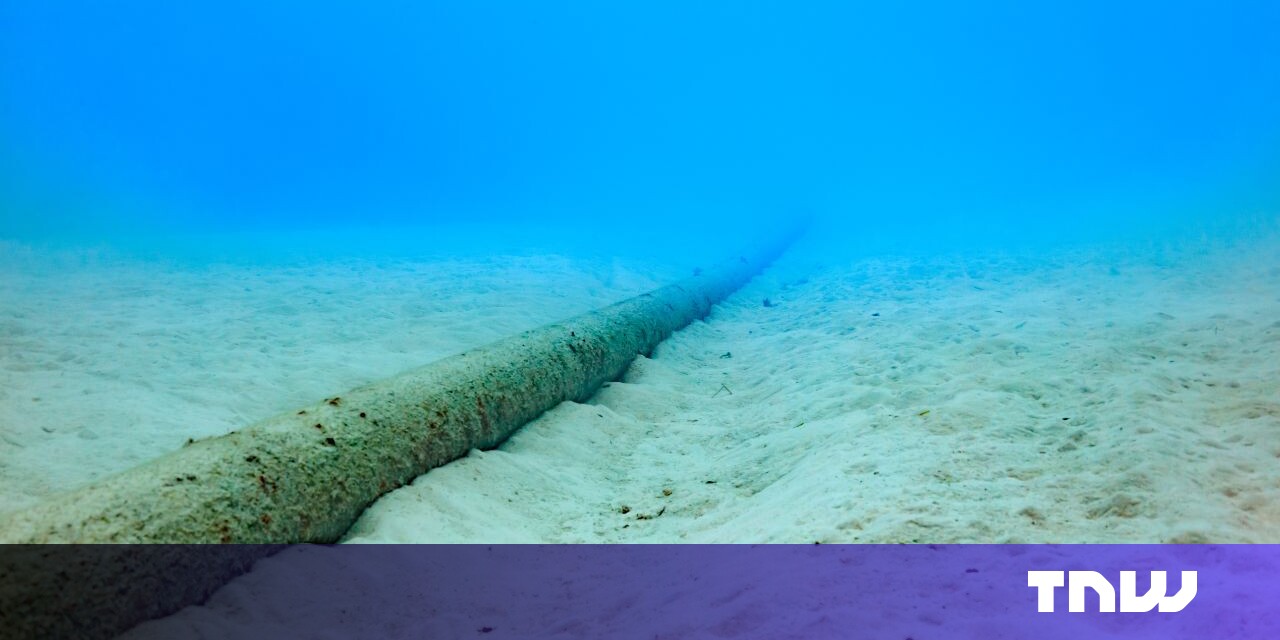
Several undersea communications cables in the Red Sea were severed on Saturday, temporarily affecting a quarter of all data traffic between Asia and Europe.
Some have accused Houthi rebels of deliberately disrupting communications. The group has carried out numerous attacks on cargo ships in the Red Sea in recent weeks, but denies any responsibility.
However, the real situation is a little more complicated.According to the German internet company DE-CIX, which rents capacity on one of the affected cables, was affected. The culprit was the anchor of a ship attacked by Houthi rebels. The British-owned merchant ship Rubimaa was attacked by Houthi missiles on February 18 and sank on Saturday morning.
“According to the information we have, at some point the crew abandoned ship and dropped anchor to prevent the unmanned vessel from getting out of control,” explained Dr. Thomas King, CTO of DE-CIX. did. “Unfortunately, the anchor was unable to hold and the drifting wreck dragged the anchor across the ocean floor, breaking the three affected lines and ultimately causing the ship to sink.”
TNW Conference 2024 – Group Ticket Offer
Save up to 40% with our group offers and join Europe’s leading technology festival in June.
Undersea cables transmit communication signals and messages across the ocean at nearly the speed of light. Sixteen fiber optic cables, which account for 17% of all international internet data traffic, run along the Red Sea’s ocean floor.
Just as the region serves as an artery for global trade, “from a telecommunications perspective, the Red Sea is the nerve link between Europe and Asia,” King said.
How will such disruption affect the Internet?
While cutting data cables in the Red Sea may seem like a pretext for an apocalyptic Internet meltdown-type scenario, the reality is much less dramatic.
Most internet service providers build their networks with such failures in mind, so if one cable is cut, data flow is automatically rerouted to another nearby line. , the connection will be maintained.
“In terms of the impact on internet users in Europe and Asia, if internet service providers and carriers have built their networks redundantly and resiliently, internet users should not experience disruption,” he said. Stated. king.
However, it also depends on where you live. In June 2022, Asia-Africa-Europe 1 (a 25,000km internet line that snakes from Hong Kong to France) has been hit by an outage, leaving millions of people disconnected from the internet. for hours.
Connection was restored within a day, but some experts say warned On the vulnerability of undersea infrastructure to terrorist attacks.
Yemen’s internationally recognized government warned last month that the Iranian-backed Houthis could attack ships at sea as well as sabotage undersea cables.
